Travertine Introduction: Origins, Care & Restoration
At Stone Guru® we are fascinated by the history and beauty of natural stone. Travertine is one of the sedimentary rocks that inspires us; its warm tones and rustic texture have been used in buildings from ancient Rome to contemporary London. In this article, we explain how travertine forms, why it remains a popular flooring choice and how to keep it looking its best. As always, our passion for stone drives us — #ForTheLoveOfStone.
What Is Travertine?
Travertine is a terrestrial limestone composed of calcite (calcium carbonate) that forms when mineral-rich water precipitates dissolved carbonate at hot springs or in limestone caves. The stone’s porous structure is created by trapped gases and organic matter such as algae and macrophytes. Its natural colours range from white and tan to cream and rusty hues. Travertine deposits are found worldwide — Italy, Turkey, Mexico and Iran are major sources, but quarries exist from Peru to the USA. These regional differences influence the stone’s colour and texture, making each tile unique.
Travertine in Architecture
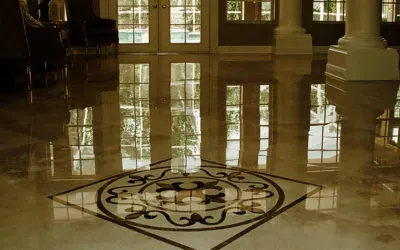
Travertine has been used as a building material since ancient times. Its rustic appearance and durability make it ideal for both classical and modern designs. Historic monuments like Rome’s Colosseum and the Sacré-Cœur Basilica in Paris are constructed from travertine. Today, the stone remains popular for floors, walls and outdoor paving because it brings warmth and character to any space. Travertine tiles are available in two forms: filled tiles, which have their pores filled for a smoother, more modern look, and unfilled tiles, which retain their natural pitted texture. Finishes range from polished (shiny) to honed (matte), brushed and tumbled, allowing homeowners to choose the right balance of elegance and slip resistance.
Travertine Cleaning and Maintenance
- Travertine is a soft, porous stone that etches and scratches easily. To maintain its beauty, follow these tips:
- Use pH-neutral cleaners: Avoid acidic or abrasive household cleaners like vinegar or bleach. Travertine specialists warn that acids can etch and dull the surface, so use gentle, pH-neutral solutions designed for natural stone.
- Sweep and mop regularly: Dust and grit can scratch travertine, so sweep or vacuum daily. Mop weekly with a damp microfiber mop and a stone-safe cleaner, then dry the surface to prevent water spots.
- Seal your travertine: Because travertine is porous, it should be sealed every 6–12 months to protect against stains and moisture. A high-quality sealant acts as a barrier, extending the stone’s lifespan.
- Prevent damage: Place rugs or mats in high-traffic areas, use felt pads under furniture legs, and clean spills immediately. Avoid dragging heavy objects across the floor and keep pet nails trimmed to prevent scratches.
Travertine Restoration: When to Call the Pros
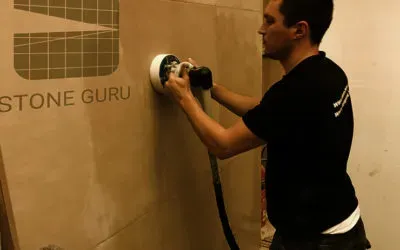
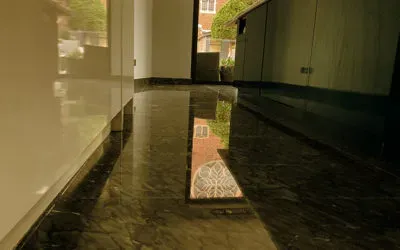
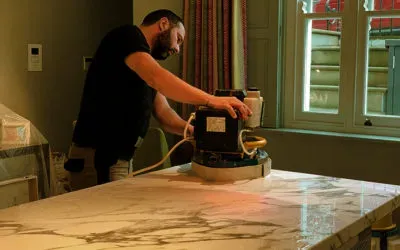
Despite careful maintenance, travertine floors can lose their lustre or develop etches and scratches over time. Professional restoration uses specialised equipment to revive the stone. Technicians begin with diamond grinding and honing to remove damaged layers and level the surface, then polish to restore a smooth, reflective finish. According to restoration experts, professional cleaning and sealing can remove deep stains, repair chips and extend the life of your travertine while improving indoor air quality. Hiring professionals is also cost-effective; they save you time and prevent mistakes that could lead to expensive repairs. Stone Guru offers customised restoration services tailored to the condition of your floors and walls.
#ForTheLoveOfStone
Natural stone has been a cornerstone of architecture for millennia because of its sophistication and durability. Travertine’s rustic charm and resilience make it a timeless choice. At Stone Guru we combine our love of stone with years of expertise to keep your travertine looking beautiful. Whether you need advice on daily care or a full restoration, get in touch — we’re here to help.