DIY Tips for Cleaning Your Stone Floor
We are Stone Guru, and our passion for natural stone drives everything we do. Travertine – one of the most widely used sedimentary rocks – forms when mineral-rich water flows through limestone deposits, releasing carbon dioxide and leaving behind a porous, textured material. Because of its warm colours, rustic character and robustness, travertine has been a preferred flooring material for centuries and remains popular today. Proper cleaning and maintenance keep travertine and other natural stones looking their best and protect your investment for years to come.
Why Proper Care Matters
Travertine is technically a type of limestone, but it goes through an additional formation stage that gives it its distinctive pores. Those pores make travertine soft and acid-sensitive. Without the right care, travertine floors can scratch, etch and stain easily. The same applies to other natural stones like marble and limestone – all are porous and absorb liquids if left unprotected. Regular cleaning, sealing and gentle handling are essential to prevent dull spots, trapped grime and moisture damage. Below are practical DIY tips to help you maintain the beauty and longevity of your stone floors.
DIY Cleaning Steps
Use a pH-neutral cleaner. Avoid vinegar, bleach or acidic cleaners – these substances etch and dull natural stone surfaces. Choose a cleaner specifically formulated for stone and dilute it according to the manufacturer’s instructions.
Sweep or dust daily. Dirt and grit can scratch the surface of travertine and other stones. Use a soft broom or dry microfiber mop to remove debris regularly.
Damp mop weekly. Mop with warm water and a pH-neutral cleaner. Use a microfiber mop to avoid scratching and follow the grain of the stone for better dirt removal. Never soak the floor; excess water can penetrate grout and weaken the stone.
Clean the grout gently. Grout absorbs dirt and moisture. Use a grout cleaner designed for stone and a soft-bristle brush; avoid high-alkaline or acidic products.
Dry and buff. After mopping, dry the floor with a clean microfiber cloth to prevent water spots and streaks. Buff lightly for added shine.
Seal regularly. Sealing creates a protective barrier against stains, etching and moisture. Because travertine and many other stones are porous, seal them every 6–12 months depending on foot traffic. Perform the water-drop test: if water darkens or absorbs quickly, it’s time to reseal.
Protect high-traffic areas. Place doormats at entrances, use rugs in busy zones, and fit felt pads under furniture legs to prevent scratches and wear. Keep pet nails trimmed and avoid dragging heavy objects across the floor.
When to Call the Professionals
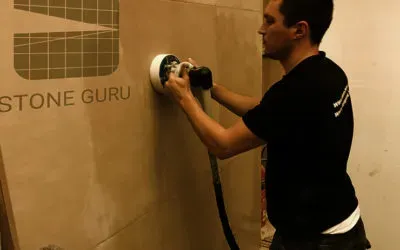
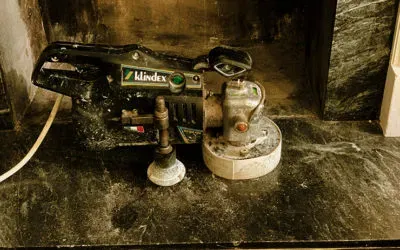
DIY cleaning removes surface dirt, but it can’t fix deep scratches, etching or serious staining. Professional restoration uses industrial-grade equipment and diamond abrasives to hone and polish the stone, restoring it to a like-new finish. Hiring experts is often more cost-effective than replacing damaged flooring and can significantly increase your property’s value.